
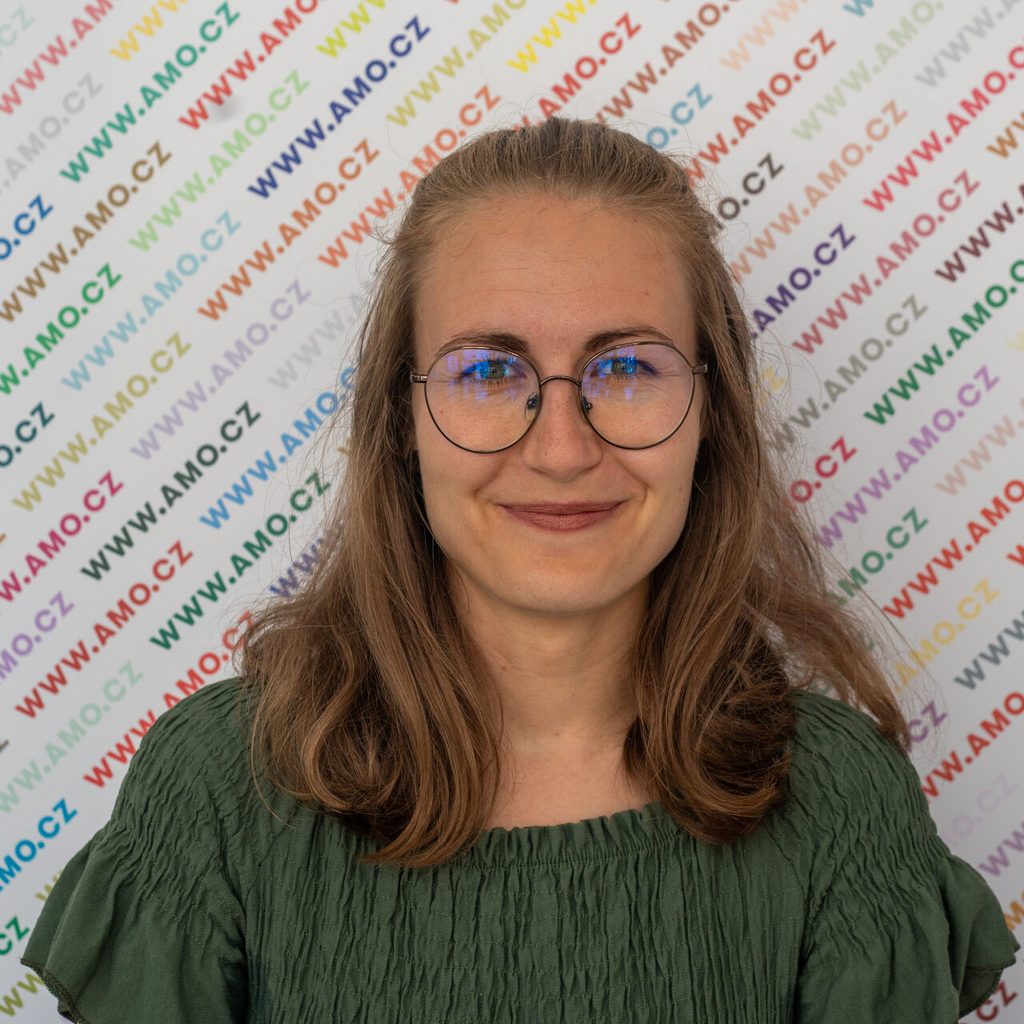
Czech researcher Michaela Kožmínová studies how agricultural and food policy shapes what ends up on our plates. She joined the ISAAP advisory board because the project looks at the whole food journey, not only at the person standing at the end of it.
ISAAP (Innovative Strategies to Accelerate Adoption and Consumption of Plant-Based Food) draws on an advisory board of experts from across the EU. In the second of our series introducing them, we meet Michaela Kožmínová, researcher and analyst at AMO klima, the climate team of the Czech think tank Association for International Affairs, where she examines and compares food and agricultural policies aimed at greater sustainability and resilience.
Why she said yes
Michaela was drawn to the breadth of the project. She describes what attracted her as “the project’s holistic approach that aims to accelerate the transition to more plant-based diets, while looking at the entire food journey from farmers to consumers, and considering the implications of such transition for public health, the environment, and people’s wallets.”
The second reason is harder to come by. “I like that the project takes into account the experiences, successes and failures of stakeholders from across Europe and promotes collaboration between sectors and countries,” she says, “something that I consider crucial for food systems transformation, but which is unfortunately still quite rare.”
She adds a third, with evident pleasure: the board itself. Sitting alongside high-level professionals specialising in food systems and protein diversification from across the EU makes the meetings, in her words, truly inspiring.
The distance between evidence and policy
Michaela’s own work is about what policy does, and does not, deliver. On the science, she sees little room for argument. “The scientific consensus on sustainable diets, in terms of both planetary and human health, is clear: we need to reduce our average consumption of animal-based foods, especially in the Global North.”
Czech food policy, she says, rarely moves in that direction, or moves very slowly. That gap is precisely why she values the project: collaborative work like ISAAP matters, in her view, because it brings inspiration from abroad and pushes meaningful change at home.
The myth she would most like to set straight
Ask Michaela what she would most like to correct, and she goes straight for the idea that what we eat is simply up to us.
“People’s food choices are not purely a matter of individual preference and responsibility,” she says. “These everyday decisions are shaped by myriad factors, including availability and affordability, the information we have (or don’t have) about certain products, cultural norms, marketing, visibility, and so on.”
And most of those factors have a policy behind them. She points to agricultural policy and subsidy programmes that influence which crops farmers plant and which animals they raise, to national dietary recommendations, and to the rules governing what public institutions buy and serve. Seen that way, the policy instruments are not a blunt tool applied to private choices; they are already shaping them.
Which is where national action plans come in. In Michaela’s assessment, food policies and national action plans have considerable potential to address the challenges facing food systems and to support healthier, fairer and more sustainable consumption.
Why Denmark matters for Czechia
That is the core of ISAAP’s policy work. Denmark is the only European country so far to have adopted a national Action Plan for Plant-based Foods, and the project is using it as a working model as Portugal and Czechia develop their own, with our Danish partner Dansk Vegetarisk Forening (DVF) sharing what it took to get there.
Michaela, who watches Czech food policy closely, sees the value in that transfer: “It is encouraging to see the ISAAP project taking the lead in sharing the success story of Denmark’s national action plan as inspiration for Czechia and Portugal.”
About ISAAP
ISAAP (Innovative Strategies to Accelerate Adoption and Consumption of Plant-Based Food) is a collaborative European project bringing together partners from Portugal, Czechia, and Denmark, running from September 2025 to August 2027. Our mission is to support a healthier, more sustainable, and resilient food system by promoting plant-based foods and building strong national action plans. ISAAP is co-funded by EIT Food.